Energy-domain seismic analysis
The paper used the Gutenberg–Richter relation to transform earthquake magnitude into released energy and analyze the physical pattern of Ecuador’s seismicity.
The original paper that opened the research line later formalized as SERRA/MEL: a physical-energy approach to understand Ecuador’s seismic behavior, seismic periods, seismic stages and the dominance of large earthquakes in released tectonic energy.
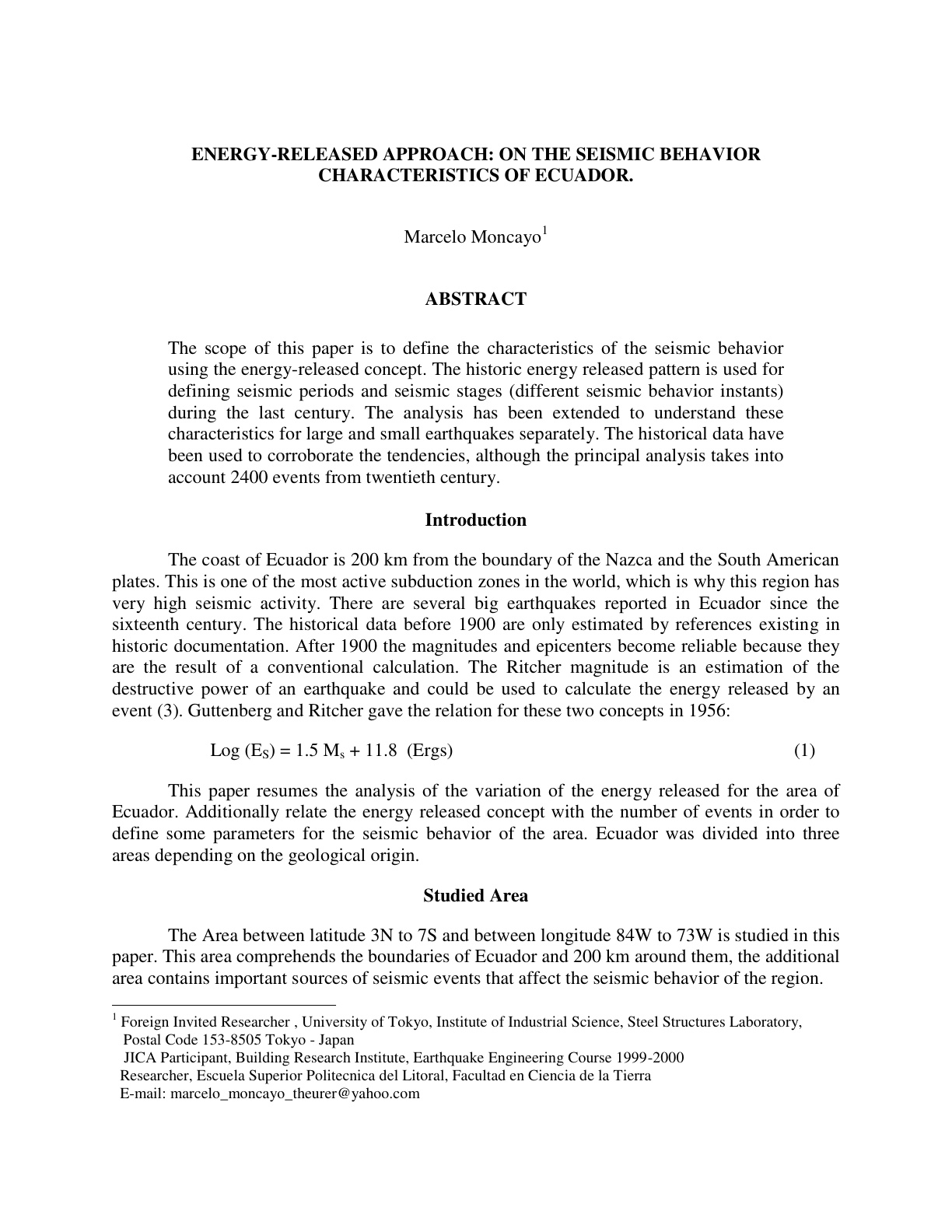
This page presents only the foundational paper. It is not a replacement for the main SERRA page; it is the historical and scientific record of the first formulation of the energy-released approach.
Magnitude is a compressed description. Energy release reveals the physical behavior of the seismic system.
Moncayo, M. (2000). Energy-Released Approach: On the Seismic Behavior Characteristics of Ecuador. Presented at the 6th International Conference on Seismic Zonation, USA.
Affiliation in the paper: Foreign Invited Researcher, University of Tokyo, Institute of Industrial Science, Steel Structures Laboratory; JICA Participant, Building Research Institute, Earthquake Engineering Course 1999–2000.
The paper used the Gutenberg–Richter relation to transform earthquake magnitude into released energy and analyze the physical pattern of Ecuador’s seismicity.
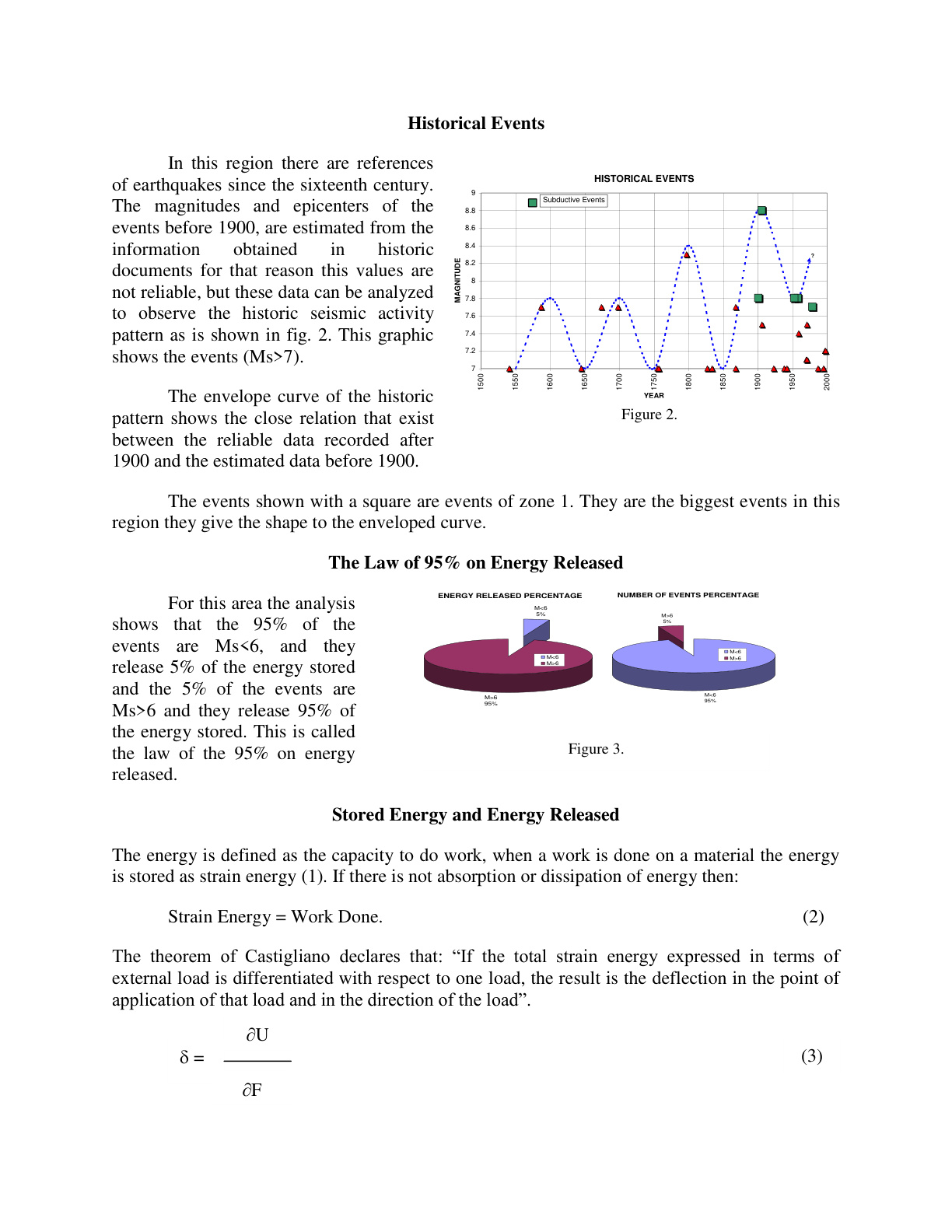
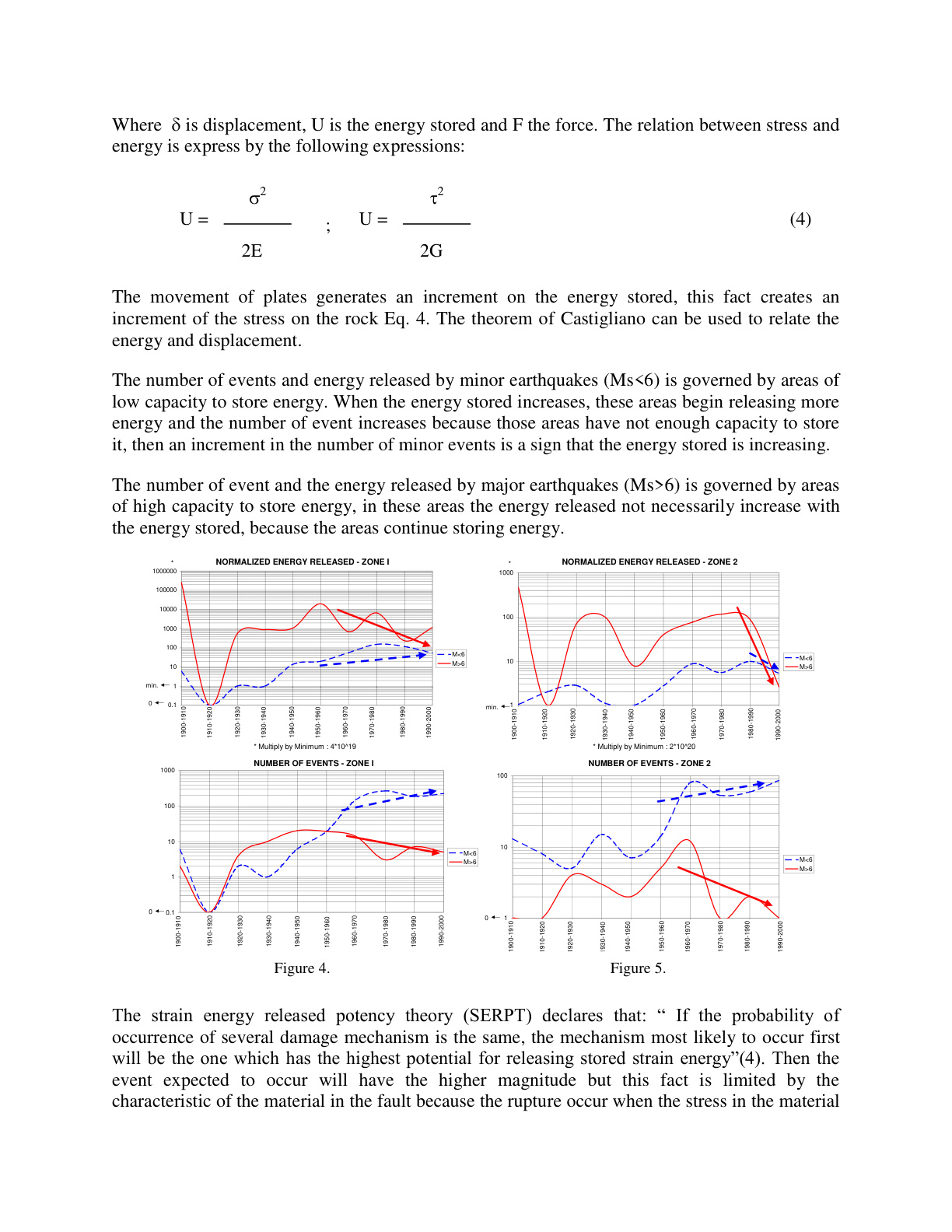
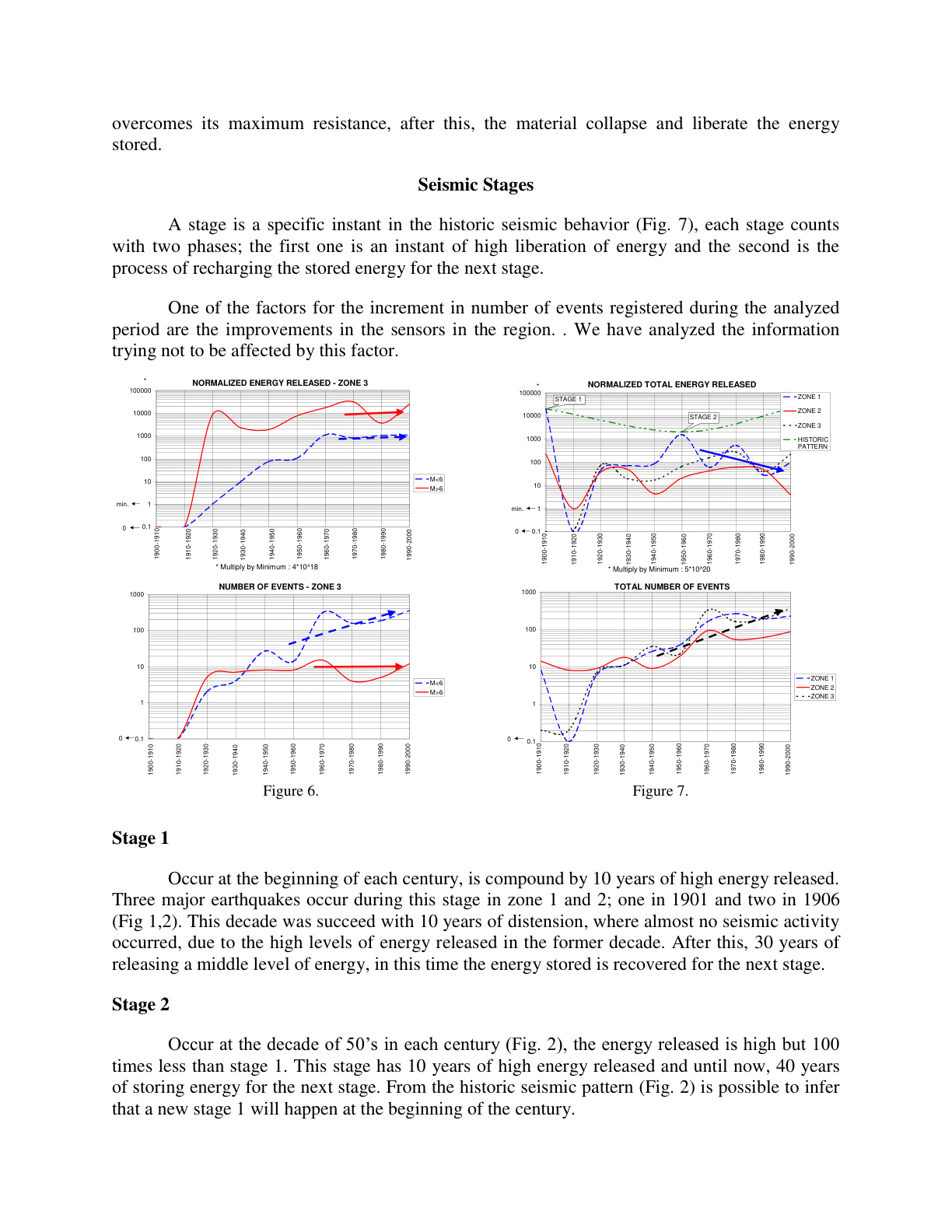
It separated the behavior of earthquakes below and above magnitude 6, showing that both populations carry different information about stored and released energy.
For the Ecuadorian area, the paper states that 95% of events with Ms<6 release only 5% of the energy, while 5% of events with Ms>6 release 95%.
The paper defined seismic stages as specific instants in historical seismic behavior, with a high-energy phase followed by a recharge phase.
The study divided Ecuador into coastal, highland and Amazonian zones based on geological origin and seismic behavior.
The text connects seismic energy release with strain energy, stress, Castigliano’s theorem and the physical storage of tectonic energy.
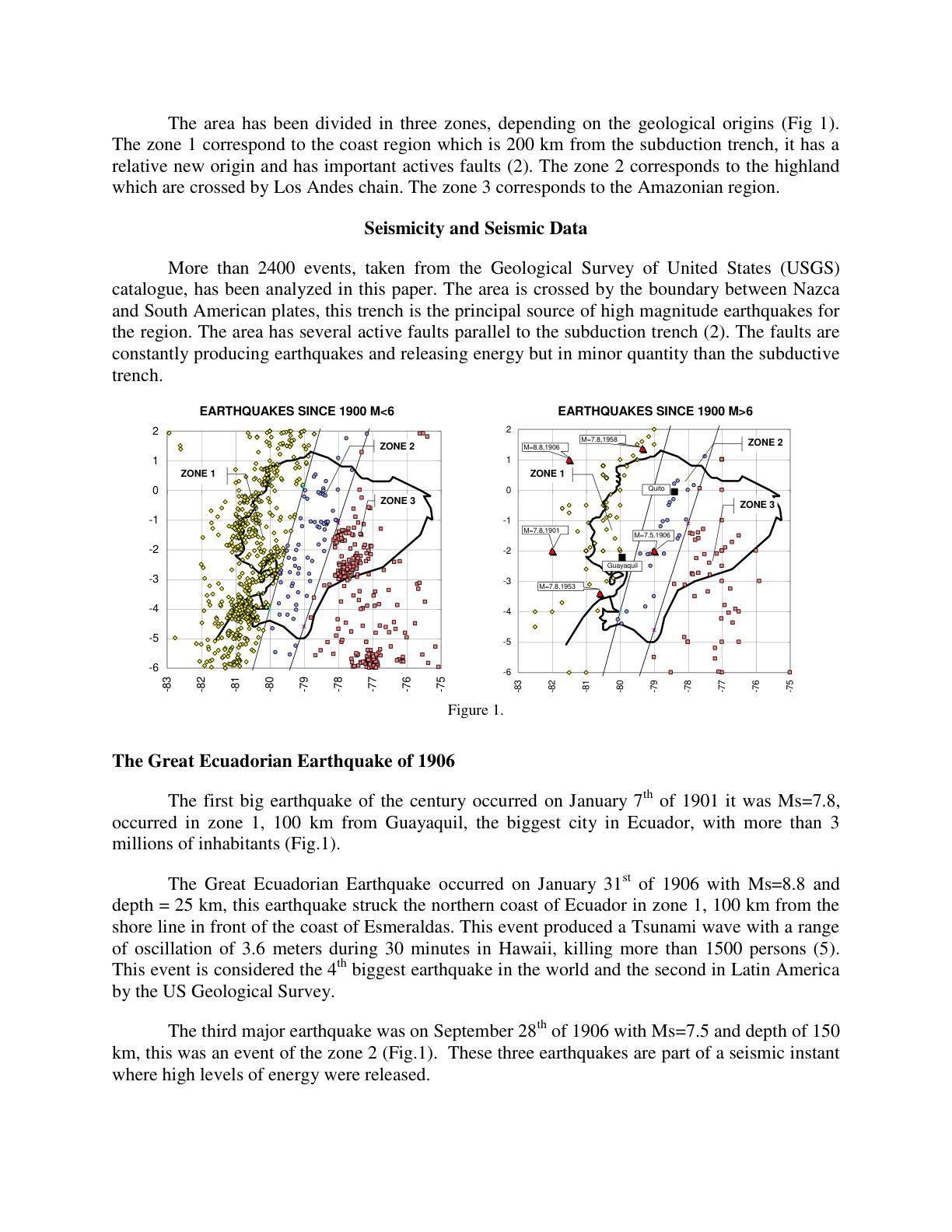
The study considered the area between latitudes 3N and 7S, and longitudes 84W and 73W, including Ecuador and surrounding seismic sources that influence the country’s behavior.
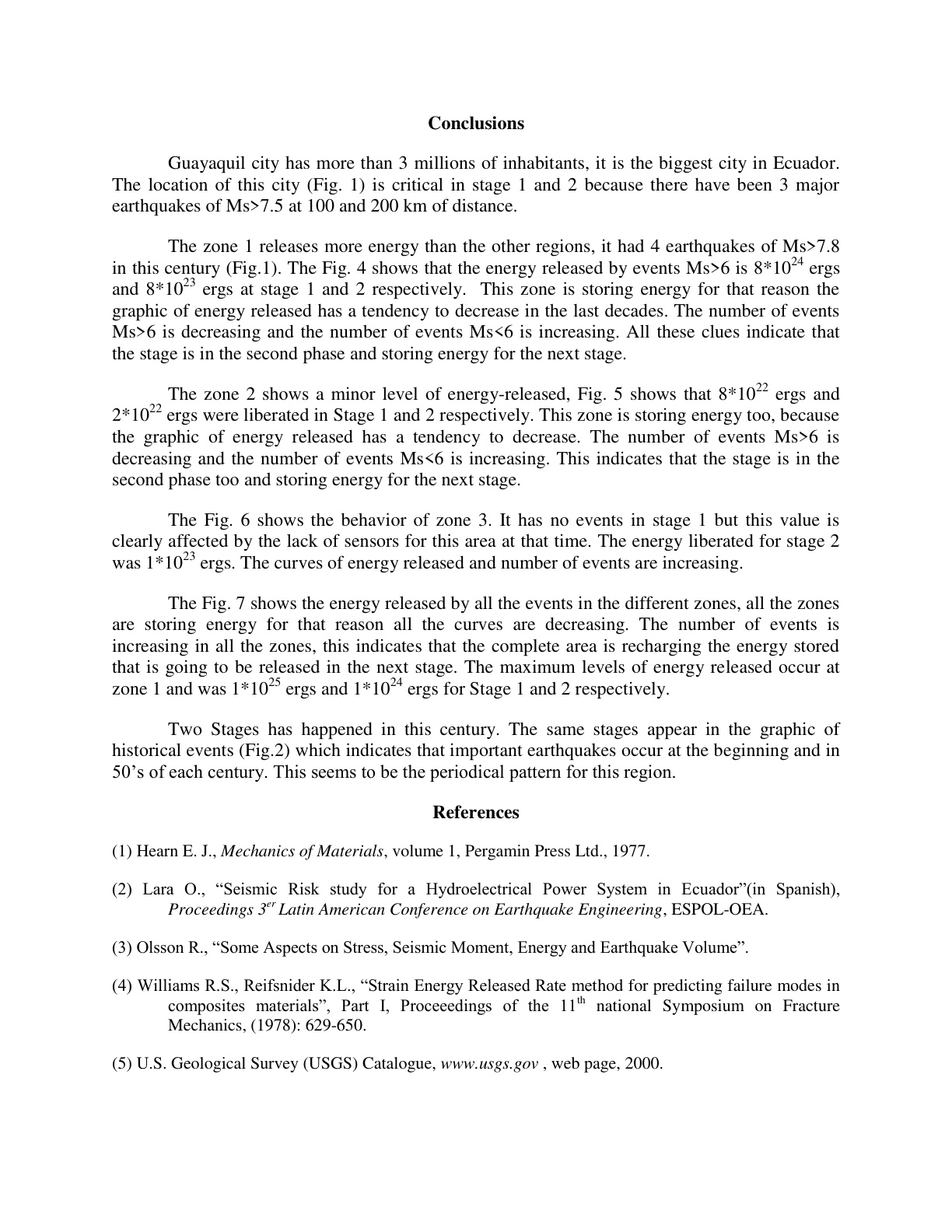
The paper highlights the 1906 Ecuador earthquake, Ms 8.8, as one of the dominant energy events of the twentieth century.
| Concept | Meaning in the 2000 paper | Later role in SERRA |
|---|---|---|
| Energy released | Earthquake magnitudes are converted into ergs using the Gutenberg–Richter relation. | Basis of energy release curves and risk mapping. |
| 95% energy law | Large earthquakes dominate the released energy budget. | Justifies focusing on high-energy events rather than event counts alone. |
| Seismic stages | Periods of high release followed by recharge phases. | Basis for reactivation-stage interpretation. |
| Stored strain energy | Plate motion increases stored energy and stress until failure occurs. | Physical foundation of the energy-based framework. |
The following images are included only to document the original six-page paper and make the historical record visible.
For scientific collaborations, technical meetings, courses, conferences or institutional applications.