15
Books
Editorial production

Open Science · Legacy Papers · THEK Metrics
Scientific works, methodologies, theses, legacy publications and research metrics of THEK Research Institute.
Current indicators of scientific production, reach and academic impact.

Editorial production
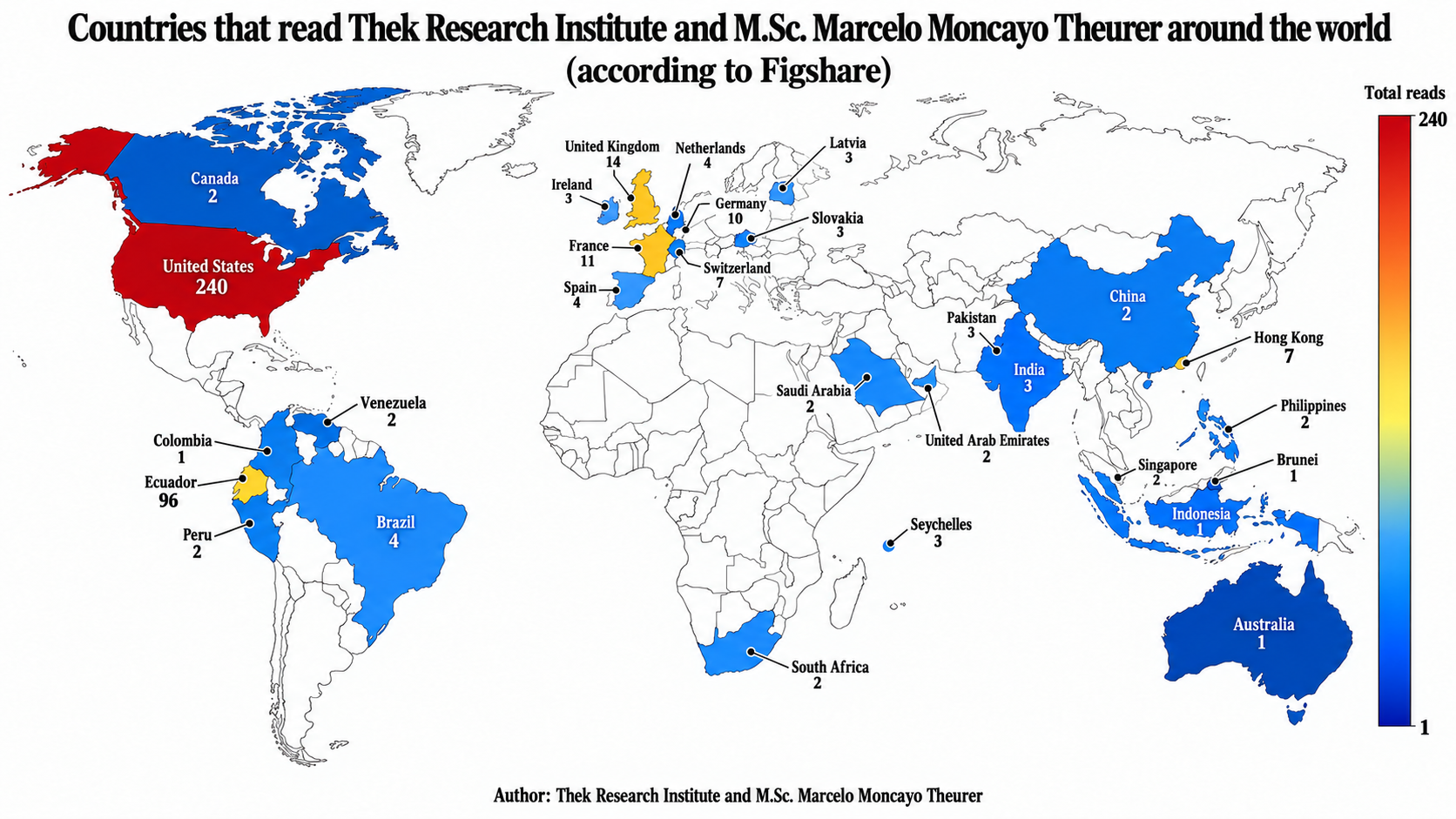
Zenodo + Figshare + ResearchGate + LinkedIn
Open Science portfolio
Current monitored total
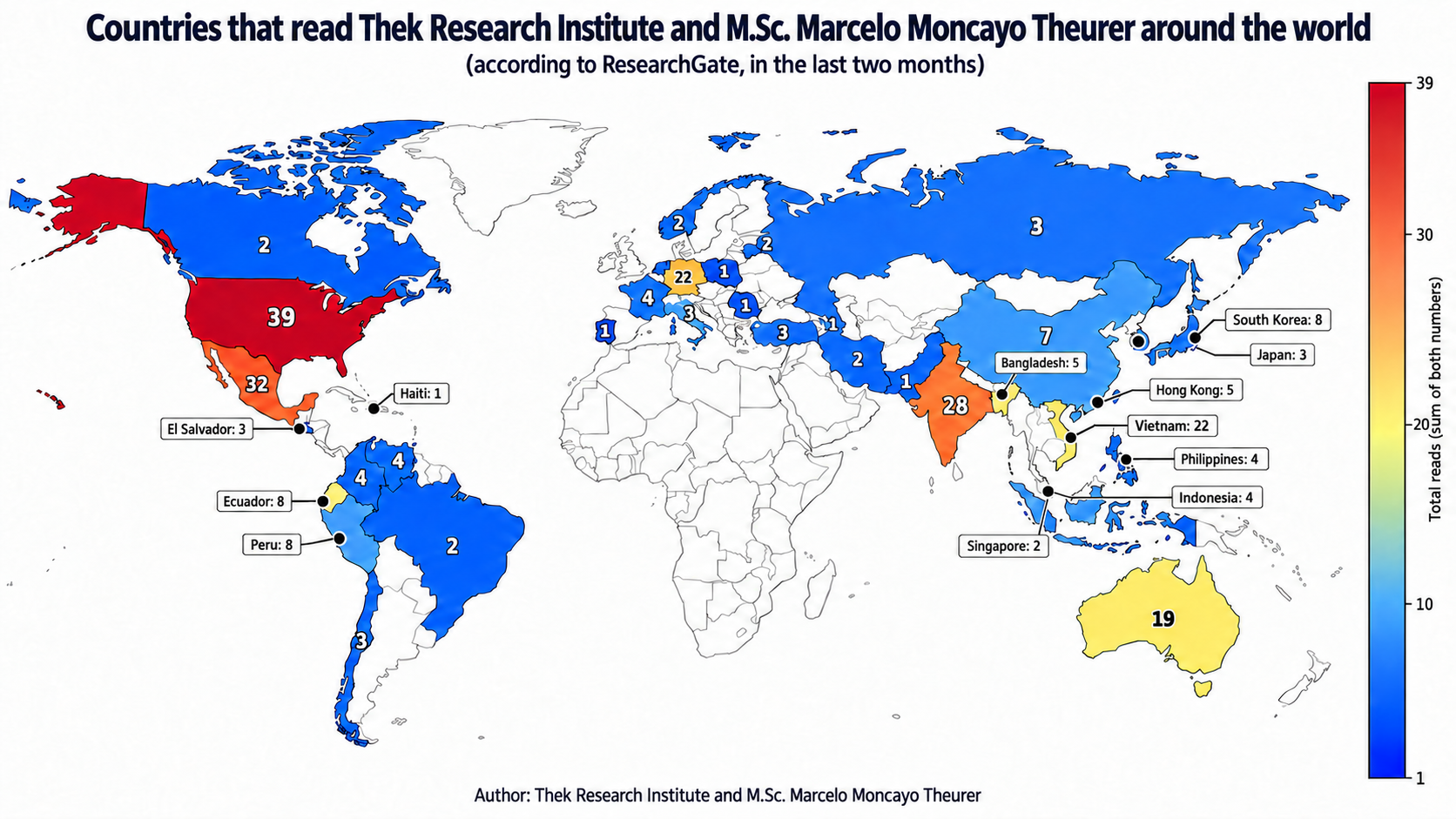
ResearchGate · last 2 months
International reach
Views + downloads
125 Google Scholar + 27 ResearchGate
Verified unique links
THEK Research Institute expressly invites deans, university authorities, engineering faculties, research centers, and academic institutions worldwide to establish scientific cooperation initiatives based on the application, development, and expansion of THEK's original scientific methodologies.
Our research portfolio provides opportunities for undergraduate and postgraduate theses, doctoral research, joint scientific projects, international academic publications, specialized seminars, and institutional cooperation agreements.
Under the scientific leadership of M.Sc. Marcelo Moncayo Theurer, THEK Research Institute promotes international collaboration in earthquake engineering, structural dynamics, computational mechanics, mathematical modeling, disaster resilience, and Open Science.
We welcome academic partnerships that transform scientific knowledge into new research opportunities, practical engineering solutions, and international academic achievements.






| # | Current work | DOI | What it contributes | Link |
|---|---|---|---|---|
| 1 | FGET — Formula Genomics and Evolution Theory | 10.5281/zenodo.20780971 | FGET proposes a conceptual framework for studying mathematical formulas as structures that can evolve, recombine and generate new formulations. It introduces an interpretation of mathematical patterns as elements that link abstract expressions and physical phenomena. Its aim is to explore procedures of mathematical discovery through transformations, combinations and evolution of structures, with potential applications in physics, engineering and the modeling of complex systems. | DOI ↗ |
| 2 | ProfeBot — A Low-Cost Generative AI Assistant for Earthquake Engineering Education in Latin America | 10.5281/zenodo.20781606 | Presents an academic assistant based on generative artificial intelligence, designed to support the teaching of earthquake engineering in Latin American universities. It integrates language models, specialized instructions and speech synthesis to explain scientific concepts, answer questions and facilitate learning. Its main contribution is a low-cost architecture that can be deployed with conventional computing resources, widening access to educational assistance and technical outreach tools. | DOI ↗ |
| 3 | NFF — Nested Formula Framework: A Hierarchical Framework for Mathematical Discovery Through Recursive Coefficient Nesting | 10.5281/zenodo.20781769 | NFF proposes building multivariable mathematical models through a hierarchical structure of nested equations. Instead of fitting all variables simultaneously, it progressively incorporates new factors and turns the coefficients obtained into functions of additional variables. This procedure allows complex formulations to be built from simpler relationships while keeping their parameters traceable. It is intended for equation discovery, analysis of physical phenomena, engineering modeling and explainable artificial intelligence. | DOI ↗ |
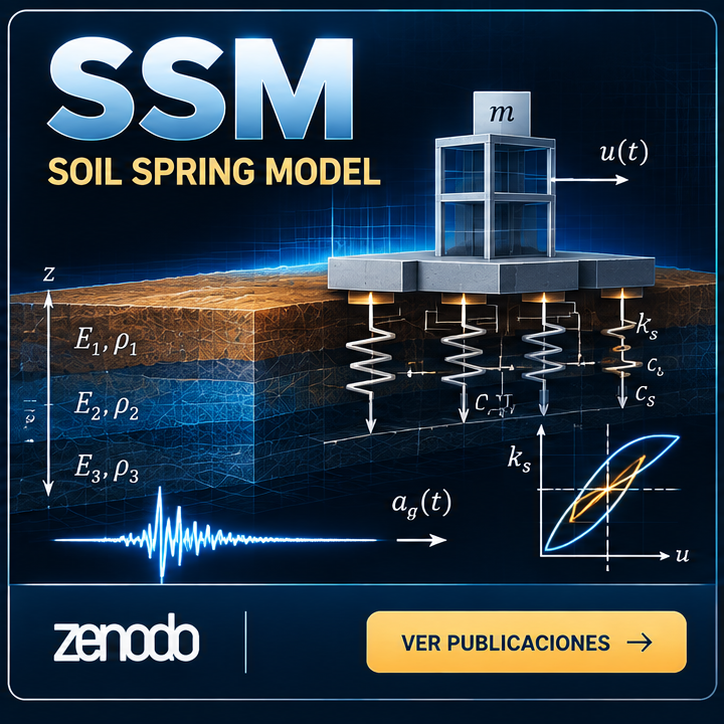
| 4 | SSM — Soil Spring Model: Validated Empirical Correlations for Soil Spring Coefficient Estimation in Clay Soils Derived Through the Nested Formula Framework (NFF) | 10.5281/zenodo.21447728 | SSM develops empirical correlations to estimate the equivalent spring coefficients used in soil–structure interaction models, particularly in clay soils. It relates soil strength parameters to the mechanical properties needed to represent soil behavior through elastic support elements. It uses formulations derived from the NFF approach and seeks to facilitate the incorporation of geotechnical characteristics into structural analysis and design models. | DOI ↗ |
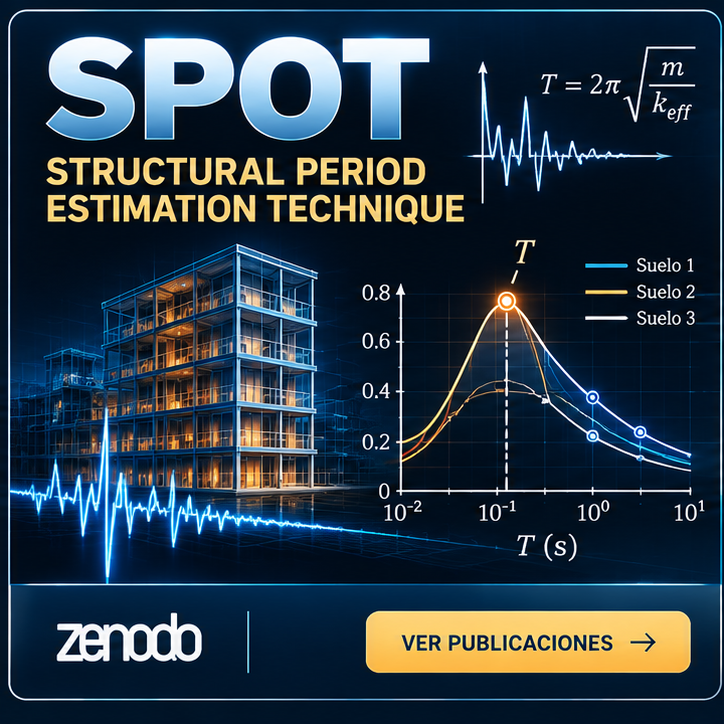
| 5 | THEK-SPOT — Structural Period Estimation Technique | 10.5281/zenodo.21896398 | SPOT proposes a technique to estimate the natural vibration period of structures through compact mathematical relationships. The period is a fundamental parameter for determining the dynamic response of a building and its interaction with seismic demands. The methodology seeks to provide useful estimates for preliminary analyses, comparison of structural behavior and earthquake-resistant design applications. | DOI ↗ |
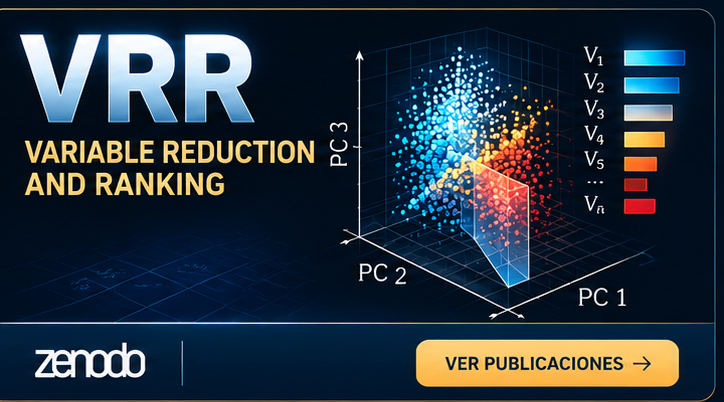
| 6 | THEK-VRR — Variable Reduction & Ranking | 10.5281/zenodo.21897648 | VRR develops a procedure to identify, reduce, classify and rank the variables involved in a complex phenomenon. Its aim is to focus modeling on the most relevant parameters and to reduce redundant or less influential relationships. The methodology can be used as a preparatory stage for building more compact and understandable mathematical models, especially in engineering systems with multiple physical, environmental, structural or socioeconomic factors. | DOI ↗ |
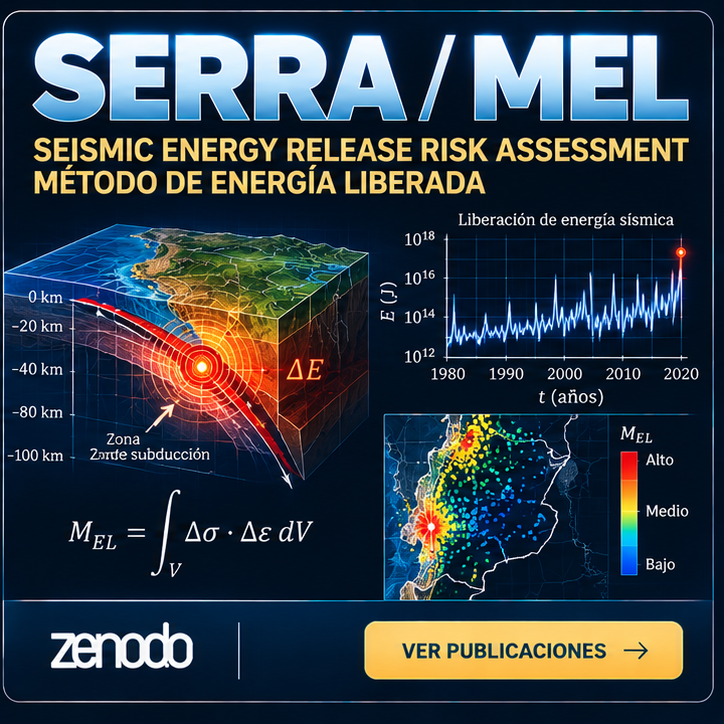
| 7 | SERRA — Seismic Energy Release Risk Assessment | 10.5281/zenodo.21989825 | SERRA, originally called the Energy Released Method (MEL), studies regional seismic behavior by transforming earthquake magnitudes into released physical energy. It analyzes the historical records of a region to characterize stages of seismic activity, quiescence and reactivation. It incorporates spatial and temporal representation tools intended for hazard and risk analysis. It is not a procedure for the deterministic prediction of earthquakes. | DOI ↗ |
| 8 | SECA-GM — Severe Earthquake Consequence Assessment – Global Modeling Method | 10.5281/zenodo.22090999 | SECA-GM proposes a global mathematical formulation to estimate the human and physical consequences of severe earthquakes. It incorporates magnitude, depth, vulnerability, population exposure and calibrated relationships to estimate deaths, injuries, missing persons, collapsed buildings and damaged buildings. Its aim is to facilitate the construction of seismic consequence scenarios and to provide quantitative information for emergency planning, risk management and resilience studies of populations and infrastructure. | DOI ↗ |
| 9 | SECA-DM — Severe Earthquake Consequence Assessment – Discrete Modeling Method | 10.5281/zenodo.22259797 | SECA-DM develops a discrete approach to estimate earthquake consequences by comparison with historical events of related characteristics. It uses information on magnitude, population and number of buildings, incorporating procedures for scaling observed consequences. Unlike a global formulation, it seeks to take advantage of specific historical references to build scenarios of damage and human impact in territories with different exposure characteristics. | DOI ↗ |
| 10 | HUIRA — Hybrid Urban Inspection and Risk Assessment · Paper I | 10.5281/zenodo.22260627 | HUIRA presents an urban assessment framework to identify seismic vulnerability and risk in groups of buildings. It integrates field inspections, structural characteristics, vulnerability analysis, damage assessment and habitability classification. Its design covers applications before and after an earthquake, making it possible to recognize buildings that require greater attention and to support the prioritization of inspections, interventions and risk-reduction strategies at the urban scale. | DOI ↗ |
| 11 | HUIRA — Hybrid Urban Inspection and Risk Assessment · Paper II | 10.5281/zenodo.22260900 | The second HUIRA paper develops its quantitative application through damage and risk indices, classification of structural typologies and spatial aggregation procedures. It allows results to be organized from the individual dwelling up to groups of buildings and urban sectors. The purpose is to turn structural inspections and assessments into comparable information for studying vulnerability, potential damage and habitability, both before and after a seismic event. | DOI ↗ |
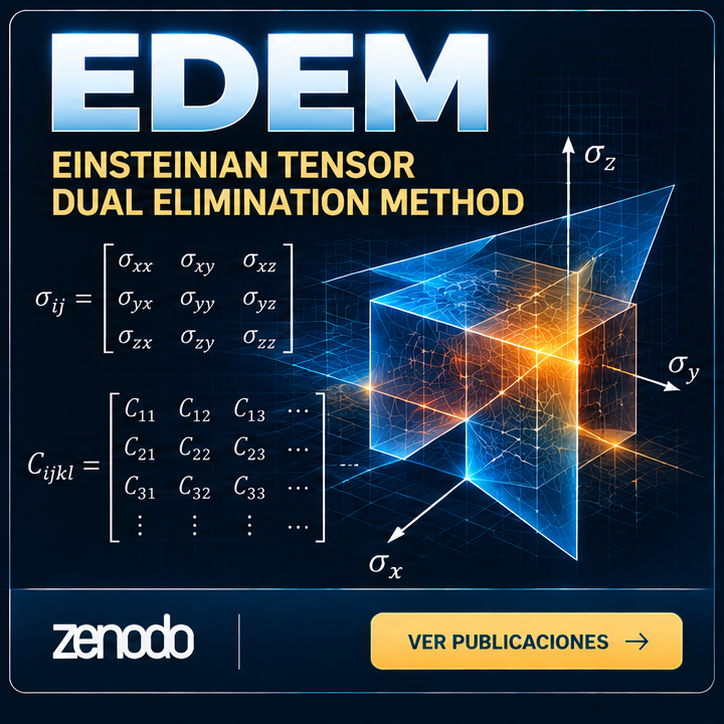
| 12 | EDEM — Einsteinian Tensor Dual Elimination Method for n × n Linear Systems | 10.5281/zenodo.22355101 | EDEM presents an algebraic method of matrix and tensor elimination for solving systems of linear equations of dimension n × n. It proposes a specific organization of elimination operations and coefficient transformations aimed at computing the solutions of linear systems. Its potential applications include structural analysis, computational mechanics, numerical simulation and other scientific problems that require solving sets of simultaneous equations. | DOI ↗ |
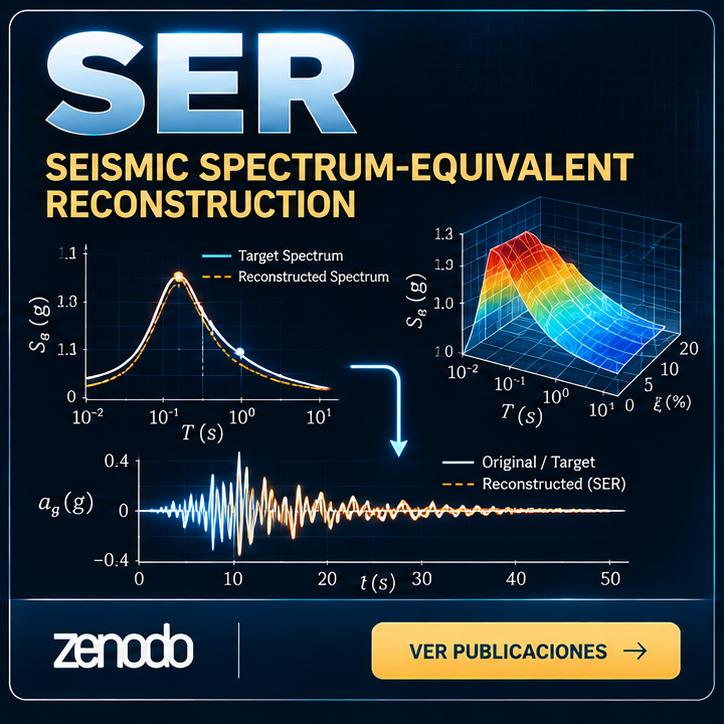
| 13 | THEK-SER — Spectrum-Equivalent Reconstruction Method | 10.5281/zenodo.22366511 | SER proposes reconstructing time histories of seismic ground motion from a target response spectrum. Its purpose is to produce records that reproduce spectral characteristics relevant to the dynamic analysis of structures. The methodology establishes a link between the representation of demand through spectra and its expression as a time signal, with applications in earthquake simulation, structural response studies and the generation of excitations for numerical analyses. | DOI ↗ |
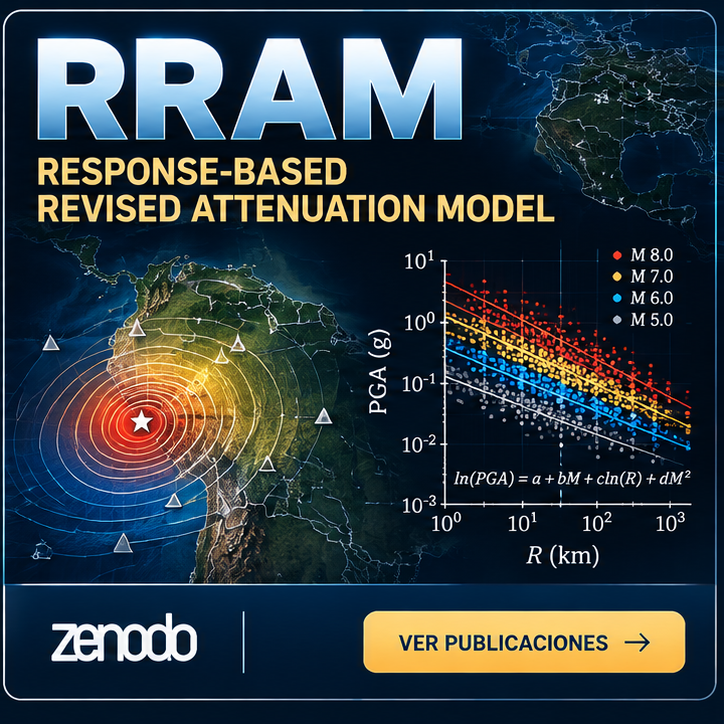
| 14 | RRAM — Real-Record Attenuation Method · Paper I | 10.5281/zenodo.22649683 | RRAM presents a methodology for developing seismic attenuation laws using real instrumental records. Its purpose is to establish relationships between earthquake parameters, distances and ground-motion measures, in order to represent how seismic intensity decreases during propagation. The first paper introduces the formulation and the approach for building these relationships, with applications in hazard analysis, ground-motion estimation and structural engineering studies. | DOI ↗ |
| 15 | RRAM — Real-Record Attenuation Method · Paper II | 10.5281/zenodo.22650007 | The second RRAM paper continues the development of attenuation relationships based on real seismic records. It extends the documentation of the methodology and its application to the study of the decrease of seismic motion with distance. Together with the first paper, it forms a research line aimed at formulating attenuation relationships for seismic-hazard studies and engineering applications, with particular interest in severe earthquakes. | DOI ↗ |
| 16 | CUBEL — Hierarchical Binary Matrix Encoding for Multidimensional Symbolic Information | 10.5281/zenodo.22650455 | CUBEL introduces a hierarchical encoding system based on binary matrices to organize and represent multidimensional symbolic information. Its structure makes it possible to establish relationships between components, levels and combinations of information through ordered mathematical representations. The method explores applications in the storage and representation of symbolic structures, the computational organization of information and the development of models capable of handling different data dimensions. | DOI ↗ |
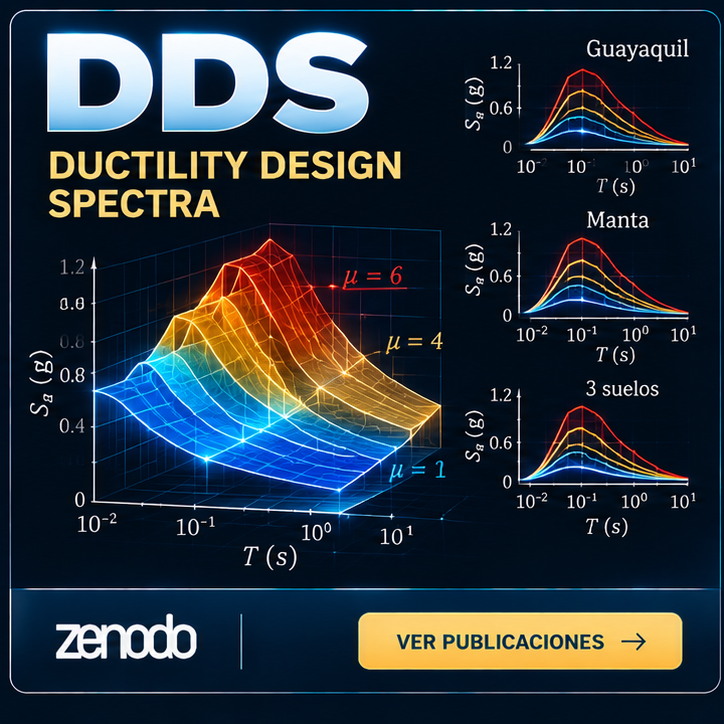
| 17 | DDS — Ductility Design Spectra: Inelastic Ductility Design Spectra — Methodology, State of the Art, and Regional Application | 10.5281/zenodo.22740254 | DDS studies the construction and application of ductility-based inelastic design spectra. It relates seismic demand to the capacity of structures to develop inelastic deformations and dissipate energy. The work presents methodological foundations, scientific background and regional applications to analyze how ductility influences design forces and the expected behavior of buildings subjected to earthquakes. | DOI ↗ |
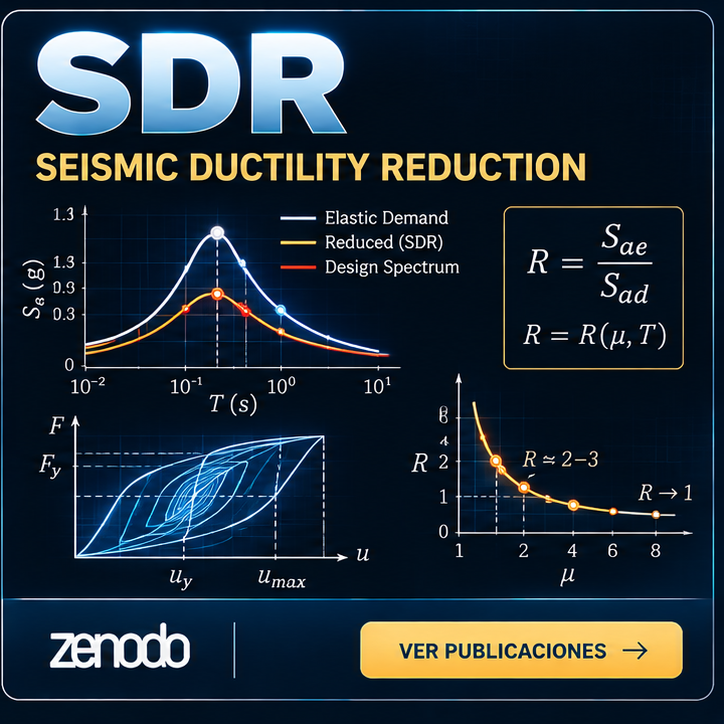
| 18 | SDR — Seismic Ductility Reduction: A Code-Oriented Proposal for Guayaquil and the Seismic Reduction Factor | 10.5281/zenodo.22741164 | SDR proposes an approach to study and formulate the seismic reduction factor used in the design of structures, taking inelastic behavior and ductility into account. It uses design conditions in Guayaquil as a reference and examines the relationship between elastic seismic demands and the reduced forces used in structural engineering. It seeks to contribute to design procedures linked to the actual performance of buildings and their energy-dissipation capacity. | DOI ↗ |
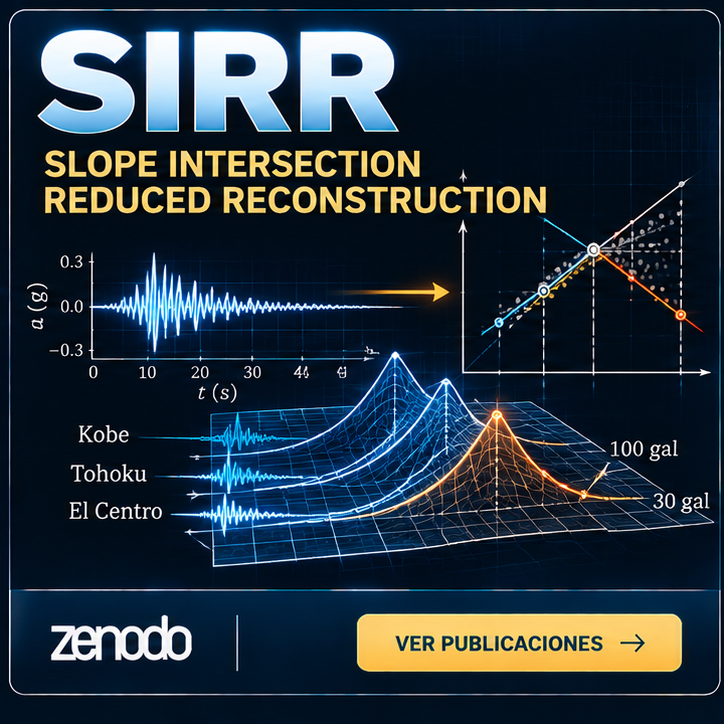
| 19 | SIRR — Slope Intersection Reduced Reconstruction Method: Reconstruction of Clipped Seismic Peaks, Historical Formulation (1999–2000) and 2026 Single-Parameter Evolution | 10.5281/zenodo.22741735 | SIRR develops a procedure to reconstruct peaks of seismic signals that were clipped because of instrumental recording limitations. It uses geometric relationships and the slopes of signal segments to estimate the part of the wave that could not be recorded correctly. The work recovers a historical formulation developed between 1999 and 2000 and presents a 2026 evolution with fewer parameters, aimed at the processing and recovery of accelerograms. | DOI ↗ |
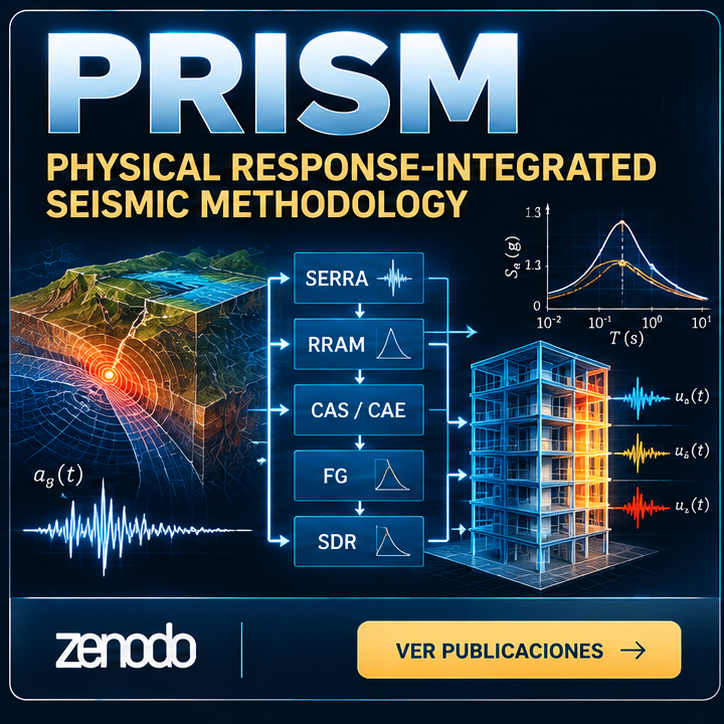
| 20 | PRISM — Physical Response-Integrated Seismic Methodology | 10.5281/zenodo.22743630 | PRISM proposes integrating seismic-hazard, structural-response and earthquake-resistant design variables within a single methodological framework. It seeks to establish physical relationships between the characteristics of ground motion and the responses experienced by buildings. The approach aims to connect components of seismic analysis that are often studied separately, enabling a joint interpretation of demands, structural behavior and design criteria. | DOI ↗ |
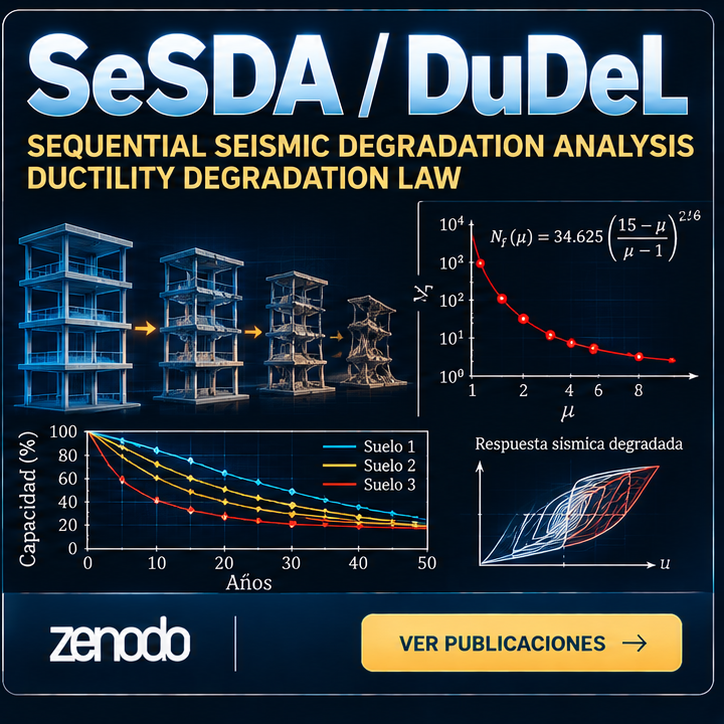
| 21 | SeSDA — Sequential Seismic Degradation Analysis: Structural Design for Seismic Sequences and Service-Life Assessment Using the Ductility Degradation Law (DuDeL) | 10.5281/zenodo.22744417 | SeSDA develops a methodology to study the behavior of structures subjected to earthquake sequences, considering the progressive accumulation of damage. It incorporates the DuDeL ductility degradation law to represent how inelastic behavior modifies structural capacity for subsequent events. The method has applications in earthquake-resistant design, performance assessment, service-life estimation and the analysis of buildings that must withstand several earthquakes without automatically recovering their initial structural condition. | DOI ↗ |
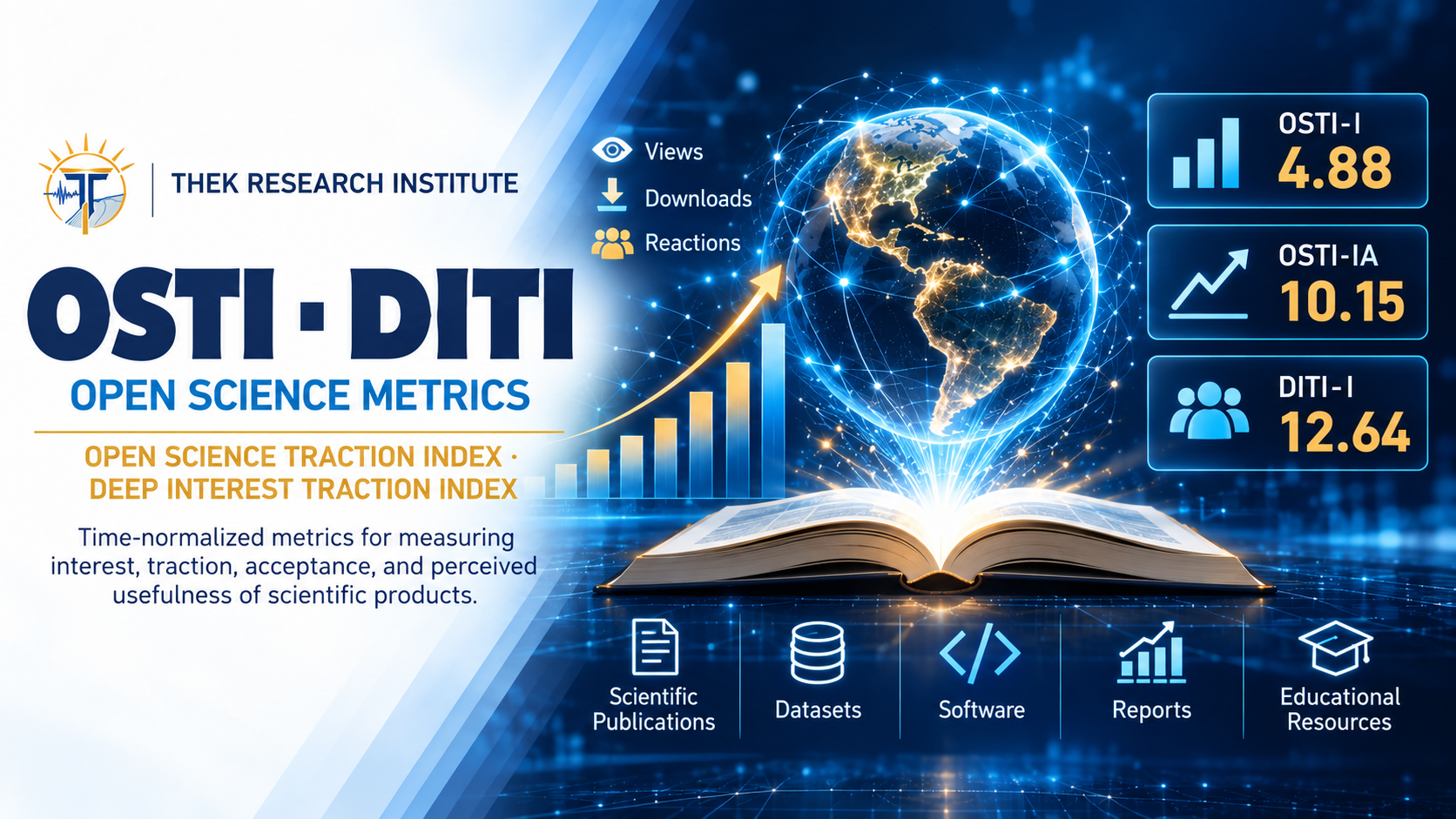
| 22 | OSTI · DITI — Open Science Traction Index · Deep Interest Traction Index | 10.5281/zenodo.23114455 | OSTI and DITI present scientometric indicators for analyzing the interest and interaction that scientific publications generate in open-science repositories. They incorporate the time dimension to relate views, downloads and continuity of interest over exposure periods. They seek to offer complementary tools for studying the reception of research, distinguishing initial attention from sustained interest and comparing the behavior of publications through quantitative indicators. | DOI ↗ |
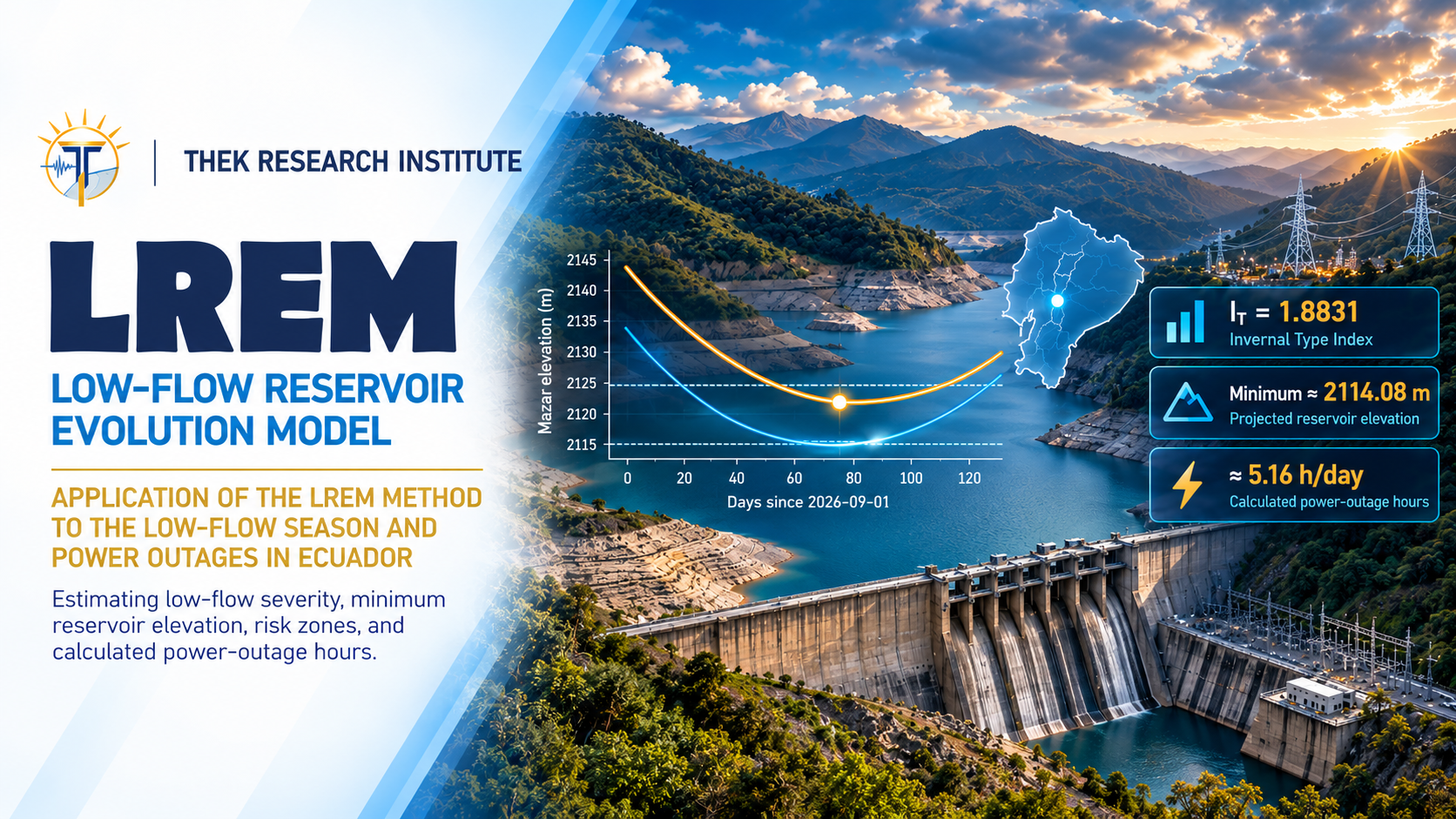
| 23 | LREM — Low-Flow Reservoir Evolution Model | 10.5281/zenodo.23145585 | LREM develops an empirical mathematical model to study the evolution of hydroelectric reservoir levels during periods of reduced inflow or low flow. It uses observable variables and mathematical relationships to represent water-level trends and to build scenarios of future evolution. Its applications include the analysis of power-interruption risk, the planning of hydroelectric systems and the study of energy resilience. The model is designed to be adapted to different reservoirs using their respective hydrological and operational data. | DOI ↗ |
| 24 | AI-Driven Automated Scientific News Generation and Dissemination System Using Large Language Models and Telegram Integration | 10.5281/zenodo.20361837 | Presents the design and implementation of an automated system for producing and distributing scientific news using artificial intelligence. It integrates OpenAI and Google language models, RSS feed processing, Python automation, programmatic image generation and distribution through Telegram. Its aim is to develop an autonomous scientific communication workflow that gathers information, produces content and facilitates its dissemination. It proposes applications in specialized publications, science communication and information systems of research institutions. | DOI ↗ |
| 25 | Empirical Validation of the Seismic Energy Release Method SERRA / MEL | 10.5281/zenodo.20588267 | This work studies the empirical application of SERRA/MEL using observed seismic information. It examines how records of released energy make it possible to characterize the temporal behavior of seismic regions and to recognize stages of variation in their activity. It aims to document the applications of the method, its physical foundations and its usefulness for interpreting regional seismic-hazard background, using historical catalogs as the source of information. | DOI ↗ |
| 26 | hPIM — Higher-order Polynomial Integration Method | 10.5281/zenodo.2274600110.2139/ssrn.7568078 | hPIM presents a family of step-by-step numerical integration methods for solving the equations of motion in structural dynamics. It uses local polynomial representations of displacement, velocity and acceleration to establish time-integration relationships. The work develops formulations aimed at computing dynamic responses under different excitations, with potential applications in earthquake engineering, computational mechanics and the simulation of structural systems. | DOI ↗ SSRN DOI ↗ |
Earlier scientific publications and academic records preserved in the THEK Research Institute publications catalogue.
| # | Legacy paper / record | Status | Context | Link |
|---|---|---|---|---|
| 1 | Las fibras de carbono como una alternativa para reforzamiento de estructuras | Legacy publication / conference | Historical academic record | Open ↗ |
| 2 | La geomalla como elemento de refuerzo en pavimentos flexibles | Legacy publication / conference | Historical academic record | Open ↗ |
| 3 | Parámetros para la construcción de un modelo matemático para simular el comportamiento dinámico del suelo debajo de la Universidad de Guayaquil | Legacy publication / conference | Historical academic record | Open ↗ |
| 4 | Terremotos mayores a 6.5 en escala Richter ocurridos en Ecuador desde 1900 hasta 1970 | Legacy publication / conference | Historical academic record | Open ↗ |
| 5 | Análisis comparativo entre 13 leyes de atenuación y los registros de un evento de 7.1 | Legacy publication / conference | Historical academic record | Open ↗ |
| 6 | Análisis sobre la recurrencia de terremotos severos en Ecuador | Legacy publication / conference | Historical academic record | Open ↗ |
| 7 | Energy Released Approach: On the Seismic Behavior Characteristics of Ecuador | Legacy publication / conference | Historical academic record | Open ↗ |
| 8 | Estimation of Dynamic Characteristics of Soils for Code Purpose — 11WCEE / 1996 (author's historical catalogue). | Legacy publication / conference | Historical academic record | Open ↗ |
| 9 | On the Characteristics of Soft Soil, Inelastic Design Response Spectra for the City of Guayaquil, Ecuador — 12WCEE / 2000. | Legacy publication / conference | Historical academic record | Open ↗ |
| 10 | Recovery of the Seismogram and Generation of the Semi-Synthetic Accelerogram for the Bahía de Caráquez Earthquake (Ms=7.2) — 6ICSZ / 2000. | Legacy publication / conference | Historical academic record | Open ↗ |
| 11 | Energy Released Approach, on the Seismic Behavior Characteristics of Ecuador — 6ICSZ / 2000. | Legacy publication / conference | Historical academic record | Open ↗ |
| 12 | Inelastic Design Response Spectra for Guayaquil City — 6ICSZ / 2000. | Legacy publication / conference | Historical academic record | Open ↗ |
University theses and related academic works connected with THEK Research Institute methodologies and research lines.
| Method / line | Related documents |
|---|---|
| See the current publications and methods index above. | |
| # | Country | Reads · last 2 months |
|---|---|---|
| 1 | United States | 38 |
| 2 | Vietnam | 29 |
| 3 | Mexico | 24 |
| 4 | India | 24 |
| 5 | Germany | 19 |
| 6 | Australia | 19 |
| 7 | South Korea | 8 |
| 8 | Peru | 8 |
| 9 | Ecuador | 7 |
| 10 | China | 7 |
| 11 | Philippines | 6 |
| 12 | Venezuela | 6 |
| 13 | Colombia | 4 |
| 14 | Bangladesh | 4 |
| 15 | Hong Kong | 4 |
| 16 | France | 4 |
| 17 | Japan | 3 |
| 18 | Russia | 3 |
| 19 | Italy | 3 |
| 20 | Chile | 3 |
| 21 | El Salvador | 3 |
| 22 | Turkey | 3 |
| 23 | Canada | 2 |
| 24 | Latvia | 2 |
| 25 | Singapore | 2 |
| 26 | Norway | 2 |
| 27 | Iran | 2 |
| 28 | Azerbaijan | 2 |
| 29 | Indonesia | 2 |
| 30 | Poland | 1 |
| 31 | Pakistan | 1 |
| 32 | Haiti | 1 |
| 33 | Portugal | 1 |
| 34 | Romania | 1 |
| 35 | Netherlands | 1 |
| 36 | Brazil | 1 |
| # | Institution / center | Location | Reads |
|---|---|---|---|
| 1 | Ho Chi Minh City Open University | Vietnam Ho Chi Minh City | 27 |
| 2 | Heidelberg University | Germany Heidelberg | 7 |
| 3 | National Institute of Technology Raipur | India Raipur | 3 |
| 4 | Dokuz Eylül University | Turkeyİzmir | 3 |
| 5 | China University of Geosciences | China Wuhan | 2 |
| 6 | Indian Institute of Technology Roorkee | India Roorkee | 2 |
| 7 | University of Angers | France Angers | 2 |
| 8 | University of Antioquia | Colombia Medellín | 2 |
| 9 | Norwegian University of Science and Technology | Norway Trondheim | 2 |
| 10 | North Eastern Space Applications Centre | India Shillong | 2 |
| 11 | Nanyang Technological University | Singapore Singapore | 2 |
| 12 | Universidad Técnica de Manabí | Ecuador Portoviejo | 2 |
| 13 | Institute of Continuous Media Mechanics | Russia Perm | 2 |
| 14 | University of the Andes | Venezuela Mérida | 2 |
| 15 | Petra Christian University | Indonesia Surabaya | 2 |
| 16 | Chinese Academy of Sciences | China Beijing | 1 |
| 17 | China Earthquake Administration | China Beijing | 1 |
| 18 | Charles Darwin University | Australia Darwin | 1 |
| 19 | Institute of Geology, China Earthquake Administration | China Beijing | 1 |
| 20 | Constanta Maritime University | Romania Constanţa | 1 |
| 21 | European Commission | Belgium Brussels | 1 |
| 22 | K.S. Rangasamy College of Technology | India Nāmakkal | 1 |
| 23 | Southern University of Science and Technology | China Shenzhen | 1 |
| 24 | North South University | Bangladesh Dhaka | 1 |
| 25 | University of Groningen | Netherlands Groningen | 1 |