Physical transparency
Works from released seismic energy derived from historical events.
Seismic Energy Release Risk Assessment — a physics-based framework that analyzes earthquake catalogs in the physical domain of released tectonic energy rather than relying only on the compressed magnitude scale.
Created by: M.Sc. (TUM) Marcelo Moncayo Theurer · Institution: THEK Research Institute.
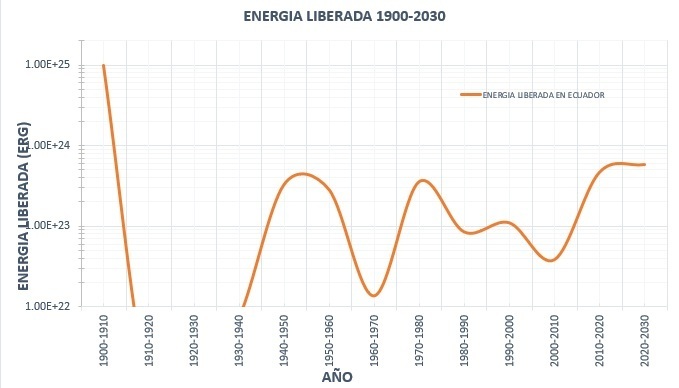
Magnitude is logarithmic and compresses the physical scale of seismic energy. SERRA/MEL transforms historical catalogs into energy-release histories so that reactivation stages, dominant seismic sources and engineering-relevant risk parameters can be studied from the region’s own record.
The framework translates historical energy behavior into spatial interpretation that can support planning, engineering and risk-management discussions.
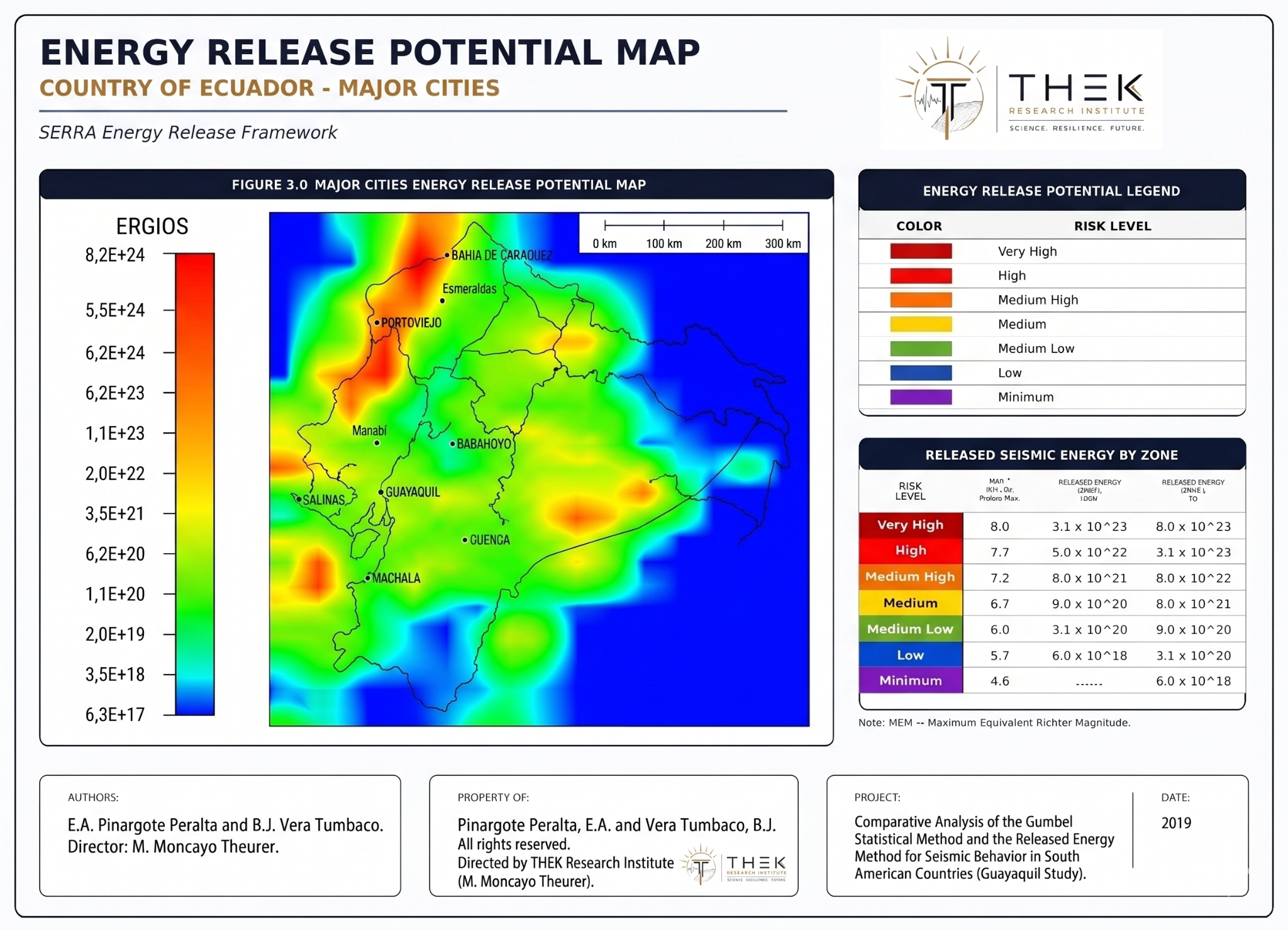
Works from released seismic energy derived from historical events.
Identifies periods of increased energy release and lower-activity phases.
Converts energy concentration into spatial products for planning.
Groups complex seismic behavior into integrated seismically active systems.
Links released energy, equivalent magnitude, attenuation and design acceleration.
Can be recalculated as new seismic-catalog data become available.
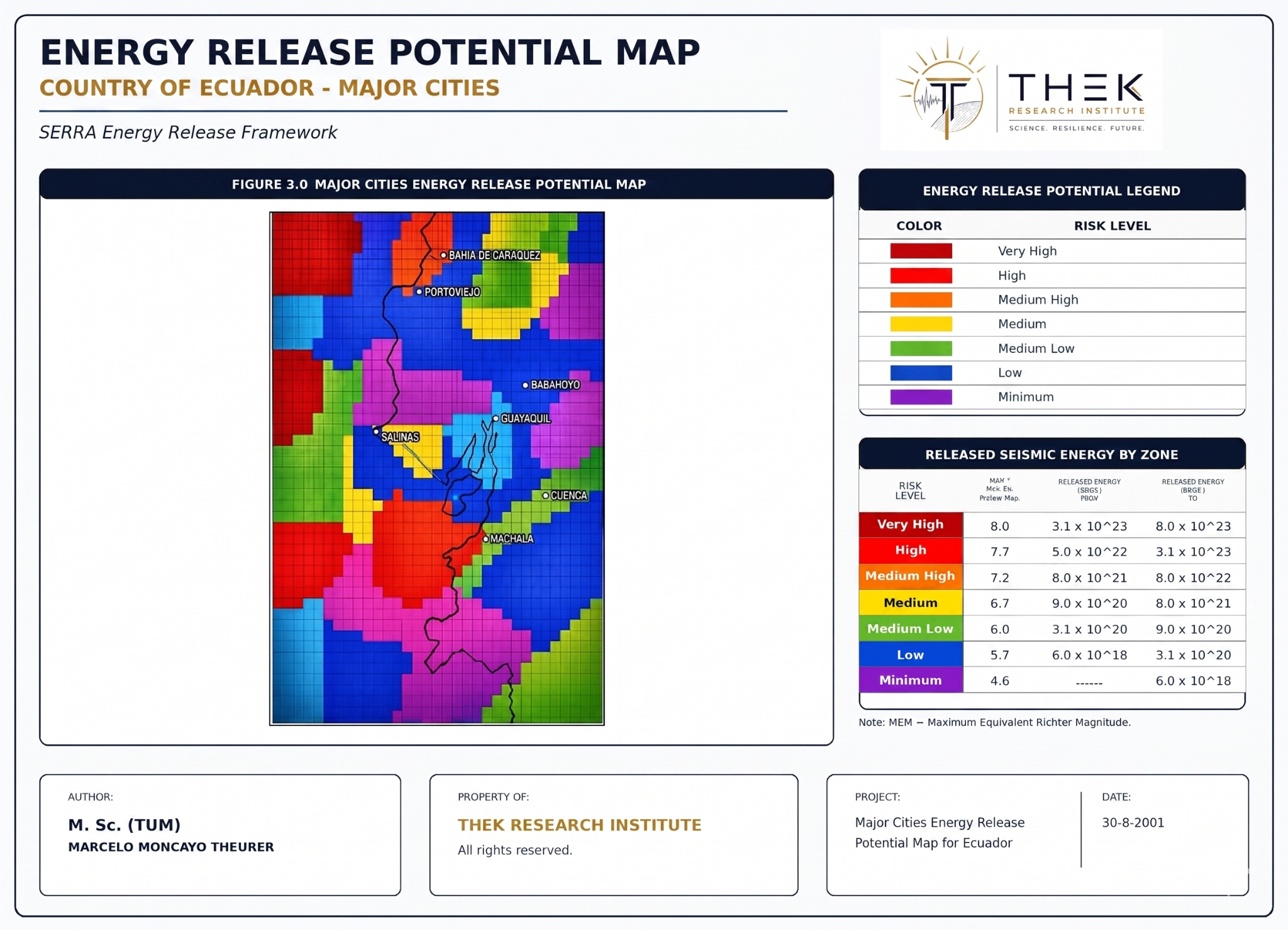
The validation study documents prospective assertions associated with the ESPOL work and compares them with later seismic activity, including the 2016 Pedernales earthquake.
Open THEK’s historical seismic prototype to explore the operational direction of the SERRA ecosystem.
For collaborations, courses, consulting projects, municipal studies, institutional partnerships or conference invitations.