Catalog
Compile earthquakes for the study region and period.
A concise view of the physical-energy workflow, from seismic catalogs to engineering-oriented interpretation.
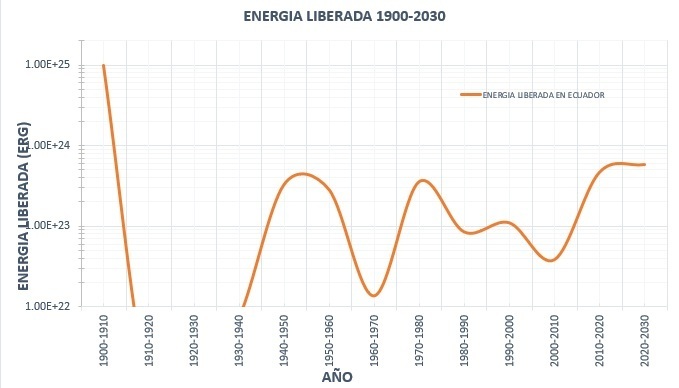
Historical earthquakes are organized in time and transformed from magnitude into released-energy values. The resulting series makes differences in physical energy much more explicit than the logarithmic magnitude scale.
Compile earthquakes for the study region and period.
Convert magnitude values into energy estimates using the adopted magnitude–energy relationship.
Aggregate and compare energy through time to identify changes in seismic behavior.
SERRA uses SIGSA as a framework for grouping and interpreting seismic behavior at the scale of integrated active systems rather than considering isolated events alone.
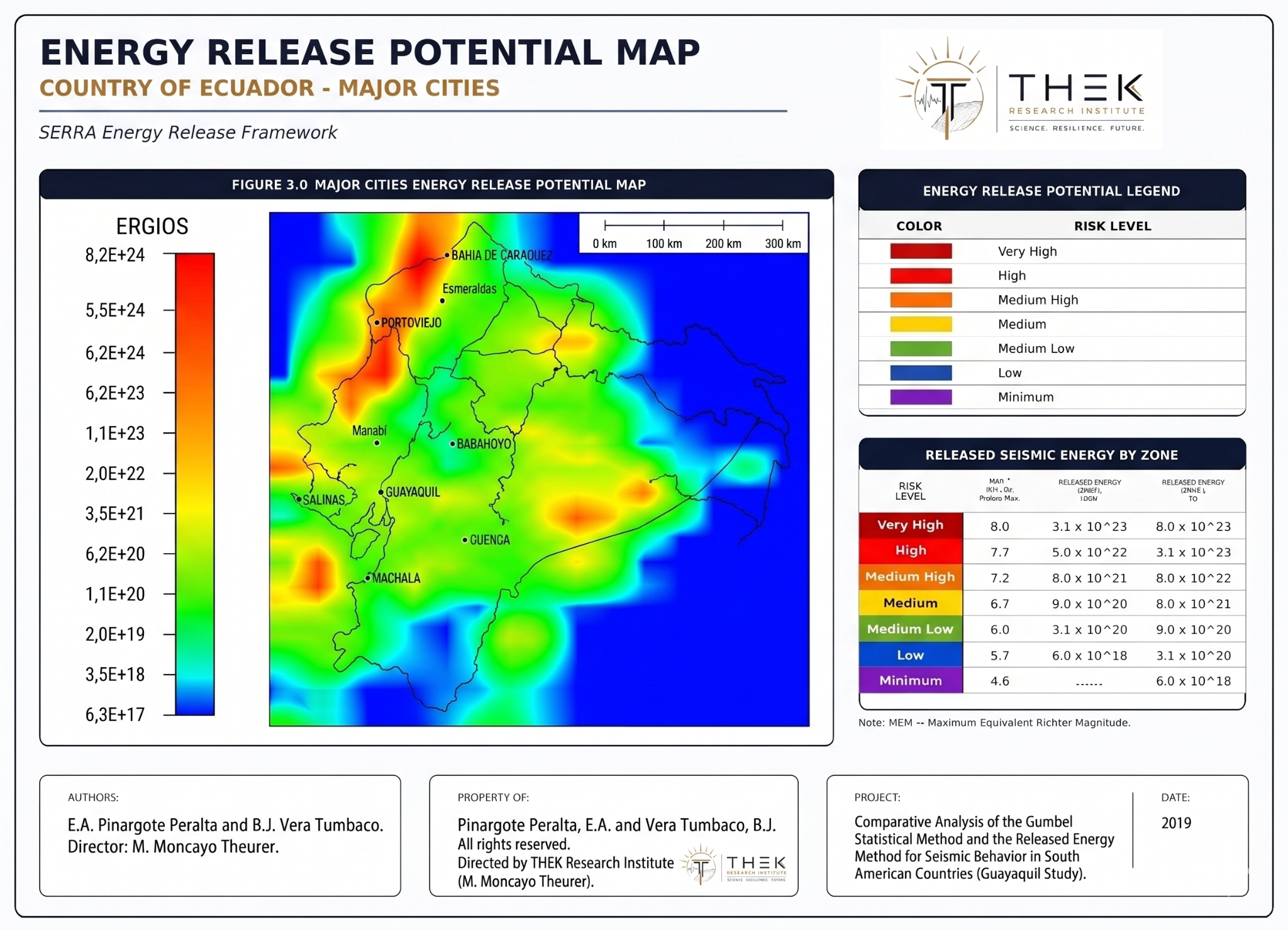
The framework connects energy history with spatial risk interpretation and can support the derivation or discussion of equivalent magnitude, attenuation and design acceleration for engineering applications.
The prototype provides a direct way to understand the operational direction of the framework.